The Czech Republic's folk traditions are not uniform. The differences between Slovácko embroidery and Chodsko embroidery, between Moravian and Bohemian Masopust, between Wallachian woodcarving and South Bohemian kraslice — these differences are significant and carry genuine regional identity.

Slovácko: The Most Visually Distinctive Region
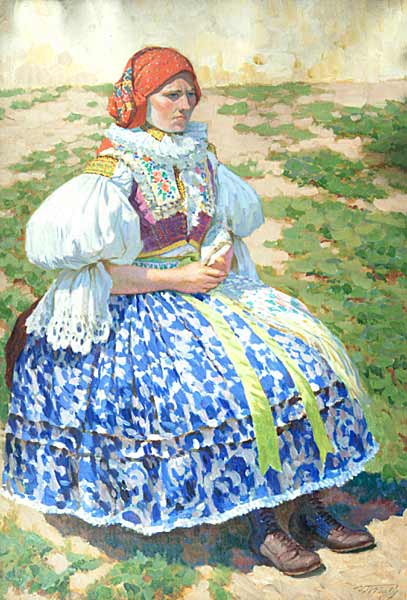
The ethnographic region of Slovácko in southeastern Moravia is where Czech folk tradition is most densely preserved and most visually spectacular. The kroj (folk costume) of Slovácko — particularly from sub-regions like Horňácko, Dolňácko, Podluží, and Zálesí — involves some of the most elaborate embroidery work in Central Europe.
Women's dress includes densely embroidered linen blouses with red, black, and blue thread; tiered skirts layered over multiple petticoats; embroidered aprons; and headdresses whose form indicates marital status and sub-regional origin. A complete Slovácko kroj for a married woman from the Horňácko region can involve over a hundred individual garment pieces and accessories.
The Slovácko region also hosts the most significant folk culture events in the Czech Republic: the International Folklore Festival in Strážnice (held annually in June since 1946), the Ride of the Kings in Vlčnov (UNESCO Intangible Cultural Heritage since 2011), and numerous village celebrations in communities like Vnorovy, Ostrožská Nová Ves, and Tvarožná Lhota that maintain folk costume as everyday celebration wear.
Haná: The Lowland Tradition
The Haná lowland around Olomouc in central Moravia developed a folk tradition distinct from the highland Slovácko style. Haná costume is more restrained in color — predominantly white linen with geometric embroidery rather than the dense floral compositions of Slovácko. The čepec (women's headdress) in Haná is flat and wide; in Slovácko it rises steeply.
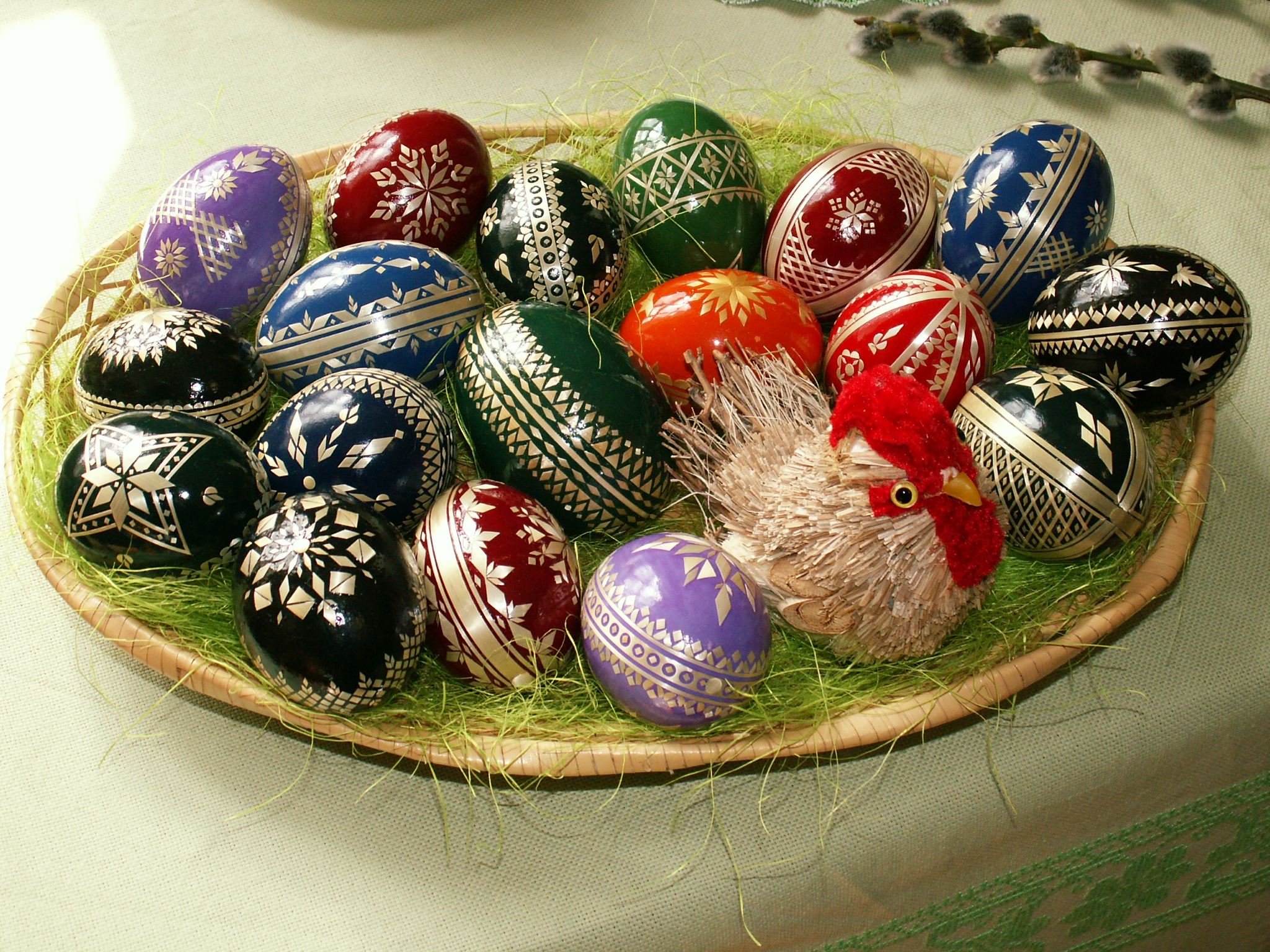
Haná is most specifically associated with the straw-appliqué kraslice technique. The Hanácké kraslice use thin rye straw strips geometrically arranged on a dyed egg — the result is three-dimensional and unmistakably regional. Exhibitions of Hanácké kraslice at Easter markets in Olomouc allow direct comparison with the wax-resist eggs from other regions.
Valašsko: The Shepherd Highlands
The Wallachian region of eastern Moravia — the Beskydy and Javorníky highlands — carried a pastoral tradition focused on sheep herding. The region was settled by Vlach (Romanian) shepherds moving northward through the Carpathians in the 16th and 17th centuries, and their cultural influence is still traceable in the folk music, architecture, and costume of the area.
Wallachian folk music uses the fujara (a long, low-pitched shepherd's flute), the gajdy (bagpipes), and the violin. The pastoral context produced a specific repertoire of shepherd songs (pastýřské písně) and a body of folk poetry centered on mountain life, forest spirits, and the freedom of the high pasture.
The Valašské muzeum v přírodě in Rožnov pod Radhoštěm is the largest open-air museum of folk architecture in Central Europe. Over a hundred buildings have been relocated from threatened sites across the region and reconstructed here, including wooden churches, mills, farmhouses, and craftsmen's workshops. Staff demonstrations of folk crafts operate seasonally.
Chodsko: The Western Bohemian Tradition
The Chodsko region in western Bohemia, around Domažlice, preserves one of Bohemia's most distinctive folk traditions. The Chods are a group defined historically by their military service guarding the Bohemian-Bavarian border in exchange for special privileges — their folk identity is tied to this warrior-guard heritage.
Chodsko folk music is built around the dudy (bagpipes) rather than the violin or cimbál of Moravia. The Chodská písnička (Chodsko folk song) has a specific pentatonic tonality and ornamental style that sounds different from other Czech folk music. The Chodské slavnosti festival in Domažlice (August) remains the major annual event of Chodsko folk culture.
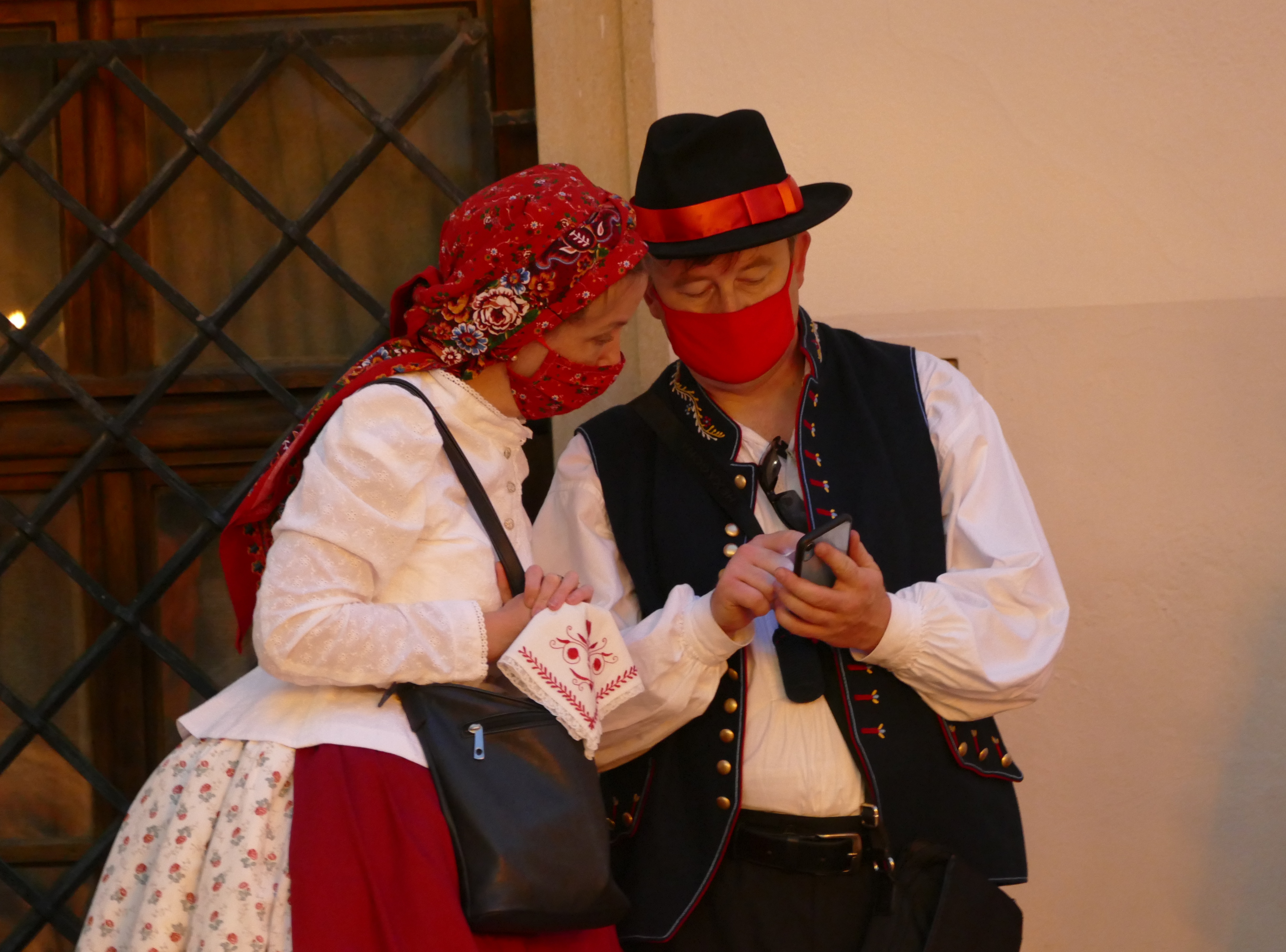
Chodsko embroidery uses red-on-white schemes with bold geometric borders and simplified floral motifs. The women's headdress (čepec) in Chodsko is notably different from Moravian styles — lower, rounder, and with different ribbon arrangement. These differences were not merely aesthetic: they communicated regional origin to anyone familiar with the system.
South Bohemia and the Blata
The Blata sub-region of South Bohemia — the wetland areas between Soběslav and Veselí nad Lužnicí — preserved a folk tradition characterized by wealth and visual excess by Bohemian standards. Blata costumes are more elaborate than most Bohemian folk dress, using more fabric, heavier embroidery, and more complex headdresses.
South Bohemian kraslice use a specific pin-dot pattern (tečkovaná technika) combined with chain borders and a central star motif that is consistently South Bohemian in character. Collectors can identify South Bohemian eggs reliably by these markers.
Sources and Further Reading
Regional information draws on the National Institute of Folk Culture (NÚLK) documentation, the ethnographic publications of the Moravian Museum in Brno, and the research of Czech ethnographer Václav Frolec on Moravian folk culture. Updated: March 2026.