
Dozinky marks the end of the grain harvest — the moment when months of agricultural anxiety resolved into certainty. The festival's rituals are essentially a negotiation with the spirits of the field, enacted through procession, wreath-making, and communal celebration.
The Agricultural Context
Before mechanization, the grain harvest was the defining event of the agricultural year in Bohemia and Moravia. A good harvest meant food security through winter; a failed harvest meant genuine hardship. The emotional weight of Dozinky — which can be translated as "harvest home" — reflects this reality. The celebration was not just festive but relieved.
Traditional harvests in the Czech lands ended between St. Margaret's Day (July 13) and St. Lawrence's Day (August 10), with the exact date depending on weather and the size of the holding. Large estates might employ dozens of seasonal workers from across the region; their departure after the harvest was marked by the Dozinky ceremony.
The Last Sheaf Ritual
The central ritual of Dozinky involved the last sheaf of grain cut from the field. This sheaf was not treated as ordinary agricultural material — it was believed to contain the spirit of the harvest, the concentrated vitality of the grain. How it was handled affected next year's yield.
The last sheaf was shaped into a female figure. The names given to this figure varied by region: baba (old woman), nevěsta (bride), stará (the old one), or simply žena (woman). She was decorated and placed prominently on the last harvest wagon for the procession back to the farmyard. There she was kept — sometimes through the winter — as a talisman of agricultural prosperity.
In some regions, the spirit of the harvest was believed to reside in the last standing stalks rather than the last cut sheaf, and the reaping of that final patch was done collectively by all harvesters striking simultaneously, so no single person bore the ritual weight of killing the harvest spirit.
The Wreath Procession
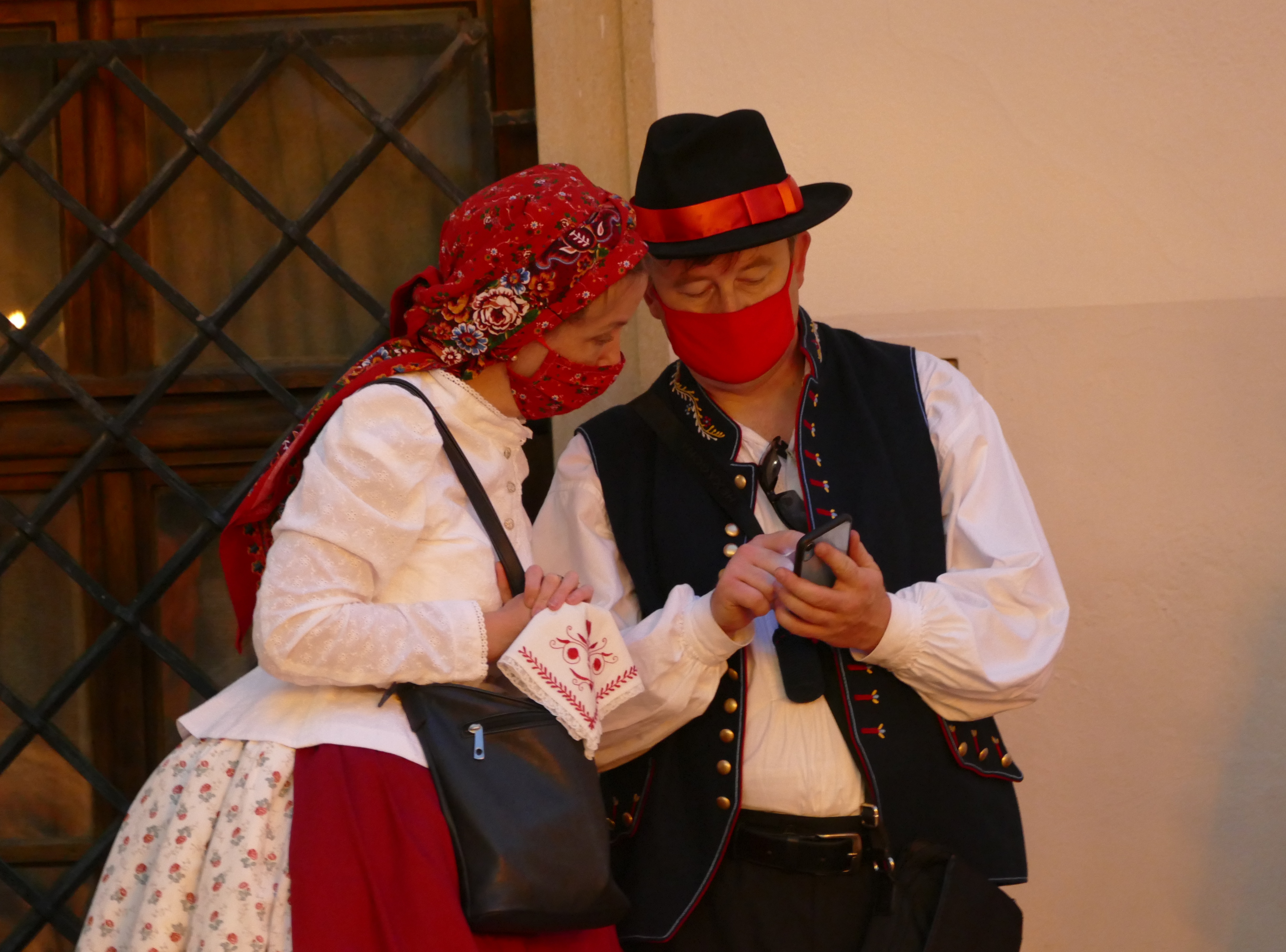
Alongside the baba figure, young women braided large wreaths (věnce) from various grain types — wheat, rye, oats — decorated with pies, small fruits, and sweets. These wreaths were worn or carried in the procession from the field to the farmyard.
At the farmyard gate, the lead girl recited a traditional verse addressed to the farm owner: "Paní mámo zlatá, otevřejte vrata! Neseme vám věnce ze samého zlata!" ("Dear landlady, open the gate! We're bringing you crowns made of gold!") The farm owner or estate manager received the wreath as a formal token of the harvest's completion, and responded with gifts — traditionally buchty (sweet filled buns) and money for the workers.
Dozinky celebrations traditionally concluded with the česká beseda — a structured folk dance requiring four couples, twelve figures, and a running time of about twelve minutes. It is the only Czech folk dance with a fixed, codified form used nationally. Learning it properly requires instruction; it's not improvised. Watching a well-executed česká beseda at a village Dozinky is a specific pleasure.
The Communist Interruption
Dozinky's history in the 20th century includes a complicated chapter. The communist government of Czechoslovakia appropriated the harvest festival as a propaganda event — Dozinky became a celebration of collective farm (JZD) productivity, with official government figures attending large state-organized celebrations. The genuine folk character of the event was subordinated to its political utility.
This association with communist spectacle caused the genuine village Dozinky to decline significantly. After 1989, revival efforts by folk culture organizations and municipalities began the slow process of returning the celebration to its authentic character. Village-level Dozinky today are generally more genuinely folkloric than the large official events ever were — precisely because they are too small to attract official attention.
Dozinky Today: What to Expect
Modern Dozinky celebrations range from small village events to larger regional festivals. Village celebrations maintain more folkloric character; town events tend toward concerts, craft markets, and food stalls. Both typically feature:
- Wreath procession and presentation ceremony
- Folk music and česká beseda dancing
- Traditional foods: buchty, bread, braised meat dishes
- Burčák — partially fermented grape must, available only in late summer through early autumn
- Craft demonstrations including threshing, bread baking, and folk craft making
The Czechology documentation of Dozinky provides current information on regional celebrations. The Strážnice Folklore Festival also includes harvest celebration elements as part of its programming.
Sources and Further Reading
Information draws on documentation from Czechology, the Czech-American TV grain harvest documentation, and the National Institute of Folk Culture's ethnographic archive. Updated: March 2026.


