Czech folk crafts are not defined by simplicity. The best examples of kraslice egg decoration, Moravian výšivka embroidery, or Valachian woodcarving represent technical achievement that takes years to develop — and traditions that have been refined over centuries.
Kraslice: The Central Czech Folk Craft
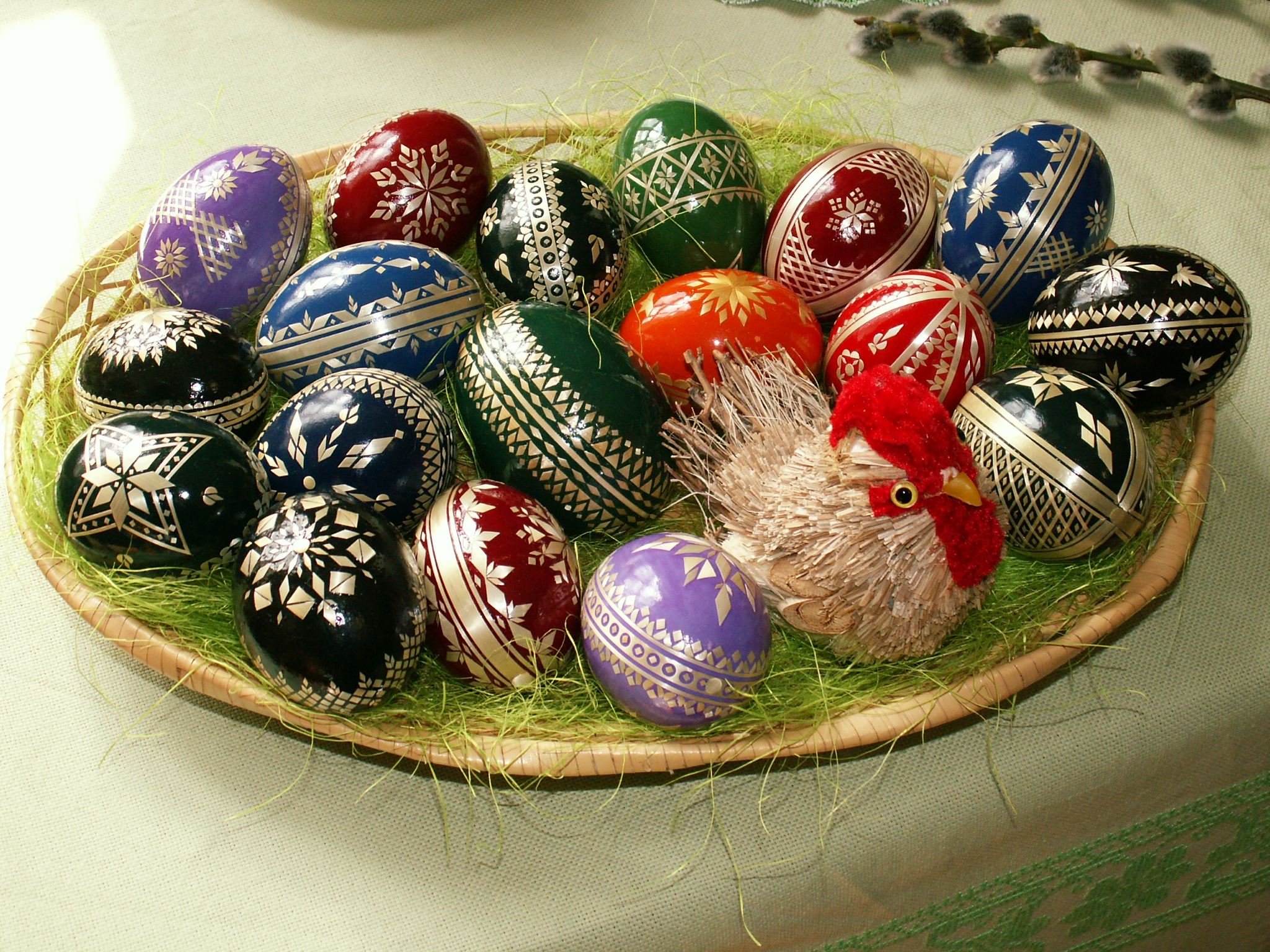
No folk craft is more closely identified with Czech culture than kraslice — decorated Easter eggs. Their prominence in the folk tradition reflects the fact that Easter preparation was the main craft event of the year in agricultural communities. Every woman was expected to produce kraslice; skill in their creation was a marker of household quality.
The four main techniques — wax-resist (batik), straw appliqué, natural dye, and scratching — are covered in detail in the Velikonoce article. What's worth emphasizing here is the craft dimension: producing a high-quality batik kraslice requires specialized tools (the kistka writing instrument), knowledge of dye chemistry, spatial planning of the pattern, and fine motor precision. The best practitioners spend weeks on their annual production.
Výšivka: Moravian Embroidery
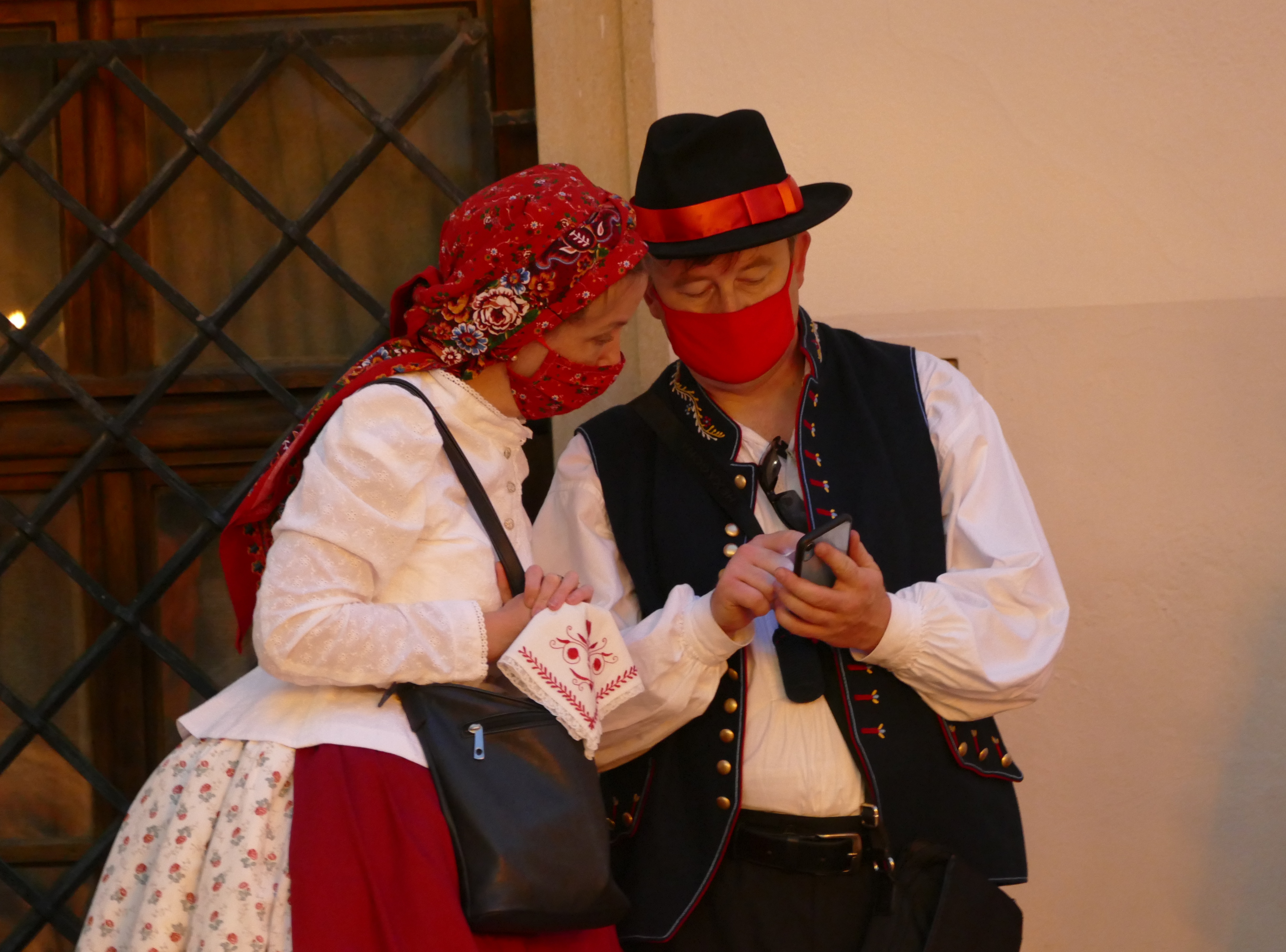
Moravian embroidery (výšivka) is the most technically demanding of Czech folk crafts and arguably the most visually striking. The embroidery on a full Slovácko kroj (folk costume) represents hundreds of hours of work — the women's blouse alone (rukávce) can require sixty to eighty hours of needlework.
Regional embroidery styles differ in thread color, stitch type, and design vocabulary. Slovácko embroidery uses bright colors — red, blue, black — in dense floral compositions against white linen. Haná embroidery is more restrained, using predominantly white-on-white work with geometric borders. Chodsko (west Bohemia) uses red-on-white with motifs derived from local plant life.
The čepec (women's headdress) in some Moravian regions is so elaborate that it constitutes a craft object in its own right — stiffened, embroidered, and decorated with ribbons that signal the wearer's marital status and regional identity. A woman's čepec from the Horňácko region, for example, takes a skilled maker two to three months to complete.

Folk Architecture and Woodcarving
Czech folk architecture — the wooden cottages, barns, and churches of the Bohemian-Moravian Highlands, Valašsko, and Šumava — represents a distinct design tradition that adapted vernacular building techniques to regional materials and climate. The Valašské muzeum v přírodě (Wallachian Open-Air Museum) in Rožnov pod Radhoštěm preserves the largest collection of relocated folk architecture in Central Europe — over a hundred structures including houses, mills, barns, and a wooden church.
Woodcarving as a folk craft developed most strongly in Valašsko, where the shepherd tradition created both the tools (the valašská sekera, a shepherd's axe used as both tool and weapon) and the leisure for carving during months spent in mountain pastures. Decorative carved objects included furniture, chests (truhly), spinning wheel components, and religious objects.
Modrotisk: Blue-Print Textile Tradition
Modrotisk — blue-print fabric — uses a resist-paste printing technique to produce white patterns on deep indigo backgrounds. The technique arrived in Bohemia in the 17th century and became associated with Czech folk clothing, particularly aprons and scarves. The process involves printing a paste of copper acetate and lime onto fabric, which resists the subsequent indigo vat dye, leaving the printed areas pale against a dark blue ground.
By the late 19th century, modrotisk workshops existed throughout Bohemia and Moravia. Today, only a handful of traditional workshops remain in operation, including the Danzinger workshop in Olešnice and the Joch workshop in Strážnice. The National Institute of Folk Culture has documented the remaining practitioners as part of its living heritage program.

Lace-Making (Krajkářství)
Bobbin lace-making was established in Czech regions — particularly Kraslice (the town, not the eggs) in western Bohemia — by the early 17th century, brought by Flemish craftswomen. The Ore Mountains (Krušné hory) region developed into a major lace production center, with the craft practiced by virtually every woman in the area by the 18th century.
The Chebsko and Kraslicko styles produce particularly fine geometric patterns using traditional bobbins. The work is produced on a lace pillow with multiple pairs of bobbins, with patterns pinned out and threads woven in complex crossing sequences. A skilled maker can produce about 10 centimeters of fine lace per hour; a single collar for a folk costume may take weeks.
Where to See Folk Crafts Today
The best places to encounter Czech folk crafts as living practice rather than museum display:
- Strážnice International Folklore Festival (June) — Folk craft demonstrations alongside music and dance from across Czech regions
- Ride of the Kings, Vlčnov (Whit Sunday, May) — UNESCO-listed event in a village that maintains full folk costume traditions
- Valašské muzeum v přírodě, Rožnov pod Radhoštěm — Living demonstrations of folk crafts in preserved folk architecture
- Museum of Decorative Arts (UPM), Prague — Significant kraslice collection with regional examples
- Ethnographic Museum, Moravian Museum, Brno — Major collection of Moravian folk costume and embroidery
Sources and Further Reading
Craft information draws on documentation from the National Institute of Folk Culture (NÚLK), the Czech Center Museum Houston kraslice collection notes, and the ethnographic literature of Josef Vydra (modrotisk documentation). Updated: March 2026.